

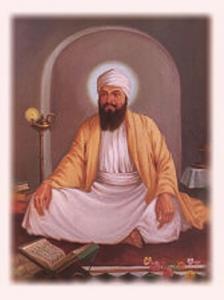
GURU TEG BAHADUR
One of the grandest stories ever anywhere, from the
annals of Indian history… a real tale of transcendent courage in the cause of
universal human values and rights, of unflinching compassion for the oppressed
and the downtrodden, and of one man’s infinite commitment to his conviction of
truth. My salutations… again and again…
… Guru Teg Bahadur lapsed into deep thought after
listening to the plight of Kashmiri Pandits, some 500 hundred of whom led by
Kripa Ram met the great warrior saint with woes of great suffering at loss of their
freedom to keep faith and their religious beliefs. They pleaded for the Guru’s
intervention with Emperor Aurangzeb to put a halt to this tyranny. The Guru
knew that this was not a problem of Kashmiri pundits alone. Their cries of pain
were screams of humanity all over the subcontinent under the hidebound and
crude Islamist regime. Nor was it a mere political matter. Their calamitous
misfortune was reflective of the senseless adversity which the entire Hindu
society was groaning under. Nor was it a case of social repression or economic
oppression. It signified a collective indignity that drew the lion in the Sikh
Guru to the fore. It was a moment of truth, an issue that concerned the very future
of humanity, in the way people of the land would live and believe, look upon
themselves and their fellowmen, through centuries to come !
When the Guru emerged from his reverie, his face shone
bright as the sun. The call of duty was upon him, and the ringing of truth was
clear in his heart. The entire might of the bigoted savagery of the Mughal Emperor
had to be opposed, here and now. The Guru’s son, Gobind Rai, barely nine year
old, was seated close to him. He asked the Guru about the cause that had sent
him into such deep contemplation. The Guru cheerfully told his inquisitive son
that there was need of sacrifice from a great man, someone exceptionally holy, for
protecting the Hindu society from its misfortune. Gobind Rai, who was brought up
in the same spirit of universal love and spiritual regeneration, instantly
suggested, “Father, who else is greater than you ?” It sealed the Guru’s steel
resolve.
The Background
Guru Teg Bahadur, the son of the sixth Sikh Guru, was
anointed the ninth in line in the year 1665 AD. As was the custom since Guru
Har Gobind, the Guru kept a splendid lifestyle. He had his royal attire, armed
attendants and a seat to suit when holding court. He himself led an austere
life and there is no historical mention of any conflict or clash with powers ruling
during his lifetime. He travelled a lot to different parts of the country, including Dacca and Assam,
to preach the teachings of Guru Nanak and resolve conflicts between
neighbouring states when invited. It was during one of these tours, in 1666, that
Gobind Rai was born.
These were one of the worst of times in Indian
history, when people were driven to the very pits of despair. Four years
through his “padshahi”, Guru Teg Bahadur was informed of Emperor Auragzeb’s
general decree, authorising and charging every State official of note with the
‘pious’ duty of demolishing all native places of worship and education,
converting as many of them into mosques, and prosecuting the persistent non –
believers as if they were “persona non grata.” After Aurangzeb's 1669
order to demolish non-Muslim temples and schools, a Sikh temple at Buriya was converted
into a mosque, which the Sikhs then demolished. The Emperor visited Punjab in
1674, and his officials forced many people to convert to Islam. The Guru gave a
call to Sikhs everywhere to withstand these persecutions.
Aurangzeb was a terror even to his co-religionists
and members of his own family. He had imprisoned his sister and his father,
Shah Jahan, and had all his brothers murdered to become an unrivalled authority
unto himself. Perhaps to wash his sins in his own eye, he presented himself to
the people as being a good Muslim, offering prayers five times a day, leading a
simple and frugal life, and defering to the advice and ruling of the Islamic
clergy, who thence endeavoured to bestow on him his very elusive ‘peace of mind.’
He sent gifts to rulers of Mecca and Medina in 1659. That year he appointed
a muhtasib as a censor to enforce Islamic laws. His main
advisors became the chief judge (qazi) and supervisor of ‘pious’
charity. In 1672, he took back all grants that had been given to Hindus. In his
zeal to reinforce the ‘pious Muslim’ face in public, he sought to please the
fanatic Islamists by converting the native non-believers, especially Hindus,
through making their keeping of faith impossible, prohibitive and fatal. His method
of measuring the success of his ‘conversion program’ was to weigh the sacred
thread worn by Hindus ! A “maund” would imply that about 7000 of them had been
either converted or killed
With major centers of learning then, Kashmir was
governed by a liberal Subedar, Mir Ahmed Khan, who restricted his
administrative machinery to maintaining law and order and implementing the
taxation policy of the State. The smooth functioning however was soon disrupted
by an overzealous Islamist, Muhata Khan, who was a powerful Islamic scholar of
repute. The latter had been sidelined by the coterie whom the brutal Emperor
courted, and was hence in dire need of establishing his ‘holier than thou’
upmanship over others in order to tide over his discontentment and regain the
Emperor’s favour.
Muhata Khan submitted to the Subedar of Kashmir a
list of measures the State must take to penalise, indignify and pauperise the
Kashmiri pundits. He was bitterly critical about the liberal policies of
Subedar Mir Ahmed Khan and his treatment of the Hindus. He had made it clear
that any avenue or opportunity available to the Hindus to advance and progress was
intolerable.
Muhata Khan’s charter of demands included the
following :
1.
Hindus should not
be allowed to ride a horse.
2.
They should not permitted
to wear the “jama” (a type of Mughal dress).
1.
They should not keep,
carry or handle any kind of weapon.
3.
They should not
visit the public gardens.
4.
They should be
barred from wearing vermillion (Tilak) on their forehead.
5.
Their wards should
not be receive education of any kind.
The Subedar Mir Ahmed Khan refused to entertain any
of the proposals submitted by Muhata Khan. He instructed Muhata Khan to keep
his distance from affairs of the State in Kashmir
.
Attack on Hindu function
But Muhata Khan
decided to have his way, by taking the law in his own hands. He set up a centre
in a mosque for carrying out his plan. He incited people, who used to come for Namaz,
and exhorted them to remain steadfast on tenets and proclamations of Islam, and
to bring the Hindu idol worshippers within the ambit of declared Islamic policies
of the Emperor. He roused a following of Muslim youth with his discourses, and raised a group of young men who were ready
to to do his bidding. Muhata Khan issued instructions for implementing the
resolutions he had submitted to the Subedar. As a result, any Hindu found with Tilak
on his forehead was mauled badly, even killed, his home vandalised and women
folk abducted, molested and raped. The Hindu could no longer ride horses, a
speedy means of transport in those days. And he could hardly carry on with his
trade or profession, or official duties of the State, without being presentable
enough in a decent dress !
An attack on a well-known trader, Majlis Rai
Chopra, took a historical turn. Majlis Rai had arranged for community luncheon
in connection with a religious function, to which thousands came. While they
were having their lunch in a garden, Muhata Khan, with a band of bigots,
attacked them with weapons. Majlis Rai managed to escape and took shelter in
the house of Mir Ahmed Shah. But that house too was srounded and picketed by
the blood-thirsty rowdies. Mir Ahmed Khan made good his escape by a secret door
and took refuge in the nearby cantonment. He waged a battle against Muhata Khan
with the help of a company of troops, but was defeated. Muhata Khan arrested
and jailed the Subedar, denouncing him as a Hindu supporter, and took over the powers
of the State.
Majlis Rai was mercilessly killed and all his
property was confiscated. It was followed by many more instances of shameless
atrocities on the Hindu community in Kashmir. The new Subedar of Kashmir,
Iftikhar Khan, took to the task of forcibly converting the Hindu population to
Islam by the sword. The Hindu Brahmin Pandits of Kashmir were among the most
learned and orthodox of Hindus and Aurangzeb felt that if they could be brought
to accept Islam the rest of the country would easily follow. He decided to
strike at their exalted identity by barring the practice of wearing tilak
(holy mark on the forehead) or janaeu (sacred thread). There was turmoil
among Kashmiri pundits and their families lived in fear of their lives. They bore
an ultimatum upon their head : convert or die.
In that conspired atmosphere of terror, many Hindus
gave in and were converted to Islam. Among the rest was Pundit Kripa Ram, who
had met the Guru several times. He led the pundits to the assuring sanctuary of
the Sikh Guru, Teg Bahadur, whose very name meant, “Brave of the Sword.” Pandit Kirpa Ram Datt would later become the
Sanskrit teacher of Guru Gobind Singh and eventually a Khalsa, and would die
fighting in the battle of Chamkaur against Mughal forces led by Wazir Khan.
The Guru Stands Tall
And Proves To Be Heavier Than A Mountain…
The Guru soon
appointed his son, Gobind Rai, as the tenth Guru of Sikhs and thus addressed
the Pandits, "Go, my esteemed friends, and tell the Emperor that if
he can cause Guru Tegh Bahadar to change his faith and accept Islam, you will
all follow suit in his footsteps. If not, he should leave you alone."
The Pandits rejoiced at the resolution and duly
informed Emperor Aurangzeb of the decision. Aurangzeb was delighted with the
reduced task of having to convert just one person in order to obtain the
cooperation of thousands of Hindus and Sikhs, and the way to bring millions of willing
infidels into the folds of Islam. He summoned his officers to arrest Guru Tegh
Bahadar and present him in the royal court.
Meanwhile, the Guru left Anandpur Sahib with Bhai
Mati Das, Bhai Dyala and Bhai Sati Das, to seek an audience in Mughal court. He
was arrested soon after on the way and brought to Delhi in chains. In the royal
court, reminiscent of Jesus’ interrogation by the Sanhedrin and Pontius Pilate,
Aurangzeb asked him why he was hailed as the Guru or the Prophet, addressed as
the 'Saccha Padshah’ or the True King. The argument between Guru Teg
Bahadur and the Emperor went on for days. Finally, the Emperor posed to the
Guru the plain course, and his Islamist sycophants echoed in unison : “ If you
really are the One, as addressed, perform a miracle for us to believe the
truth.”
Guru Tegh Bahadur was unmoved and in fact
reprimanded the Emperor for his blind orthodoxy and his persecution of people
of other faiths. He said, "Hinduism may not be my faith, and I may not
believe in the supremacy of Vedas or the Brahmins, nor in idol worship or
caste, in pilgrimage or other rituals, but I would stand for the right of all
Hindus to live with honour and dignity, and freedom to practice their faith
according to their own beliefs." The Guru further suggested : " Every
ruler of the world must pass away, but not the Word of God will not, nor would
the Saint who holds it in heart. This is how people call me a “ True King “ and
that is why they have done so through two preceding centuries, in respect of my
“ House “ and also in respect of all those others who came before and
identified themselves not with the temporal and the contingent, but with the
eternal and the immortal."
The Guru refused to perform any miracle, saying,
"this is the work of charlatans and mountebanks to hoodwink the people.
Men of God submit ever to the Will of God." Guru Tegh Bahadur refused to
embrace Islam, saying "For me, there is only one religion - of God - and
whosoever belongs to it, be he a Hindu or a Muslim, him I own and he owns me. I
neither convert others by force, nor submit to force. I will not change my
faith."
Aurangzeb was enraged and ordered Guru Tegh Bahadur
to be forced to accept Islam as his faith through torture, or be killed. It led
to a period of great cruelty on Guru Teg Bahadur’s body, and of his colleagues.
The Guru and his companions were tied to hot pillars and heated sand was poured
over their bodies, which were scalded and covered with wounds. The torment, in
some form or other, became a routine. Guru Tegh Bahadur was
kept in an iron cage and starved for many days. When even the
intolerable pain and physical afflictions heaped on them proved ineffective, orders
were issued to kill each, one after the other for appropriate effect.
The Fatwa or decree of the Royal Qazi specified
the precise manner in which the life of each one was to be taken, with maximum
brutality : Bhai Dayal was to be thrown in a boiling pot; Bhai Sati Das, to be packed
in a bale of cotton and set ablaze; and, Bhai Mati Das to be sawed into two. The Guru was made to watch as Bhai Mati Das, the devoted Sikh, was tied
between two pillars and his body sawed into two, as Bhai Dayal was boiled alive
in a cauldron of heated water until he died, and, as Bhai Sati Das was wrapped
in cotton wool and set on fire.
The Guru bore these cruelties without flinching or
showing any anger or distress. Finally, having put these orders into effect, Guru Teg
Bahadur was publicly beheaded on November 11, 1675.
Before his head was severed from the body, the Guru had enough to recite the
first five lines of the sacred book, Japuji.
The Gurus body was left to lie in dust, in Chandni
Chowk, the area right in front of the Red Fort, where no one dared to approach
for fear of the Emperor’s reprisal. But a severe storm swept through the city
and, while it raged, a Sikh named Bhai Jaita managed to collect the Guru's
sacred head under the cover of darkness. He brought the Guru’s precious remain
to Anandpur Sahib, where Guru Gobind waited for the latest to happen. Another
Sikh, Bhai Lakhi Shah, smuggled the Guru’s headless body in a cart and brought
it to his house nearby, where the Gurudwara Rakabganj today stands. Since a
public funeral would have been impossible, Bhai Lakhi Shah cremated the body by
setting the entire house on fire !
At Anandpur Sahib, on November 16, 1675, the young
Guru Gobind Singh and the grief stricken widow, Mata Gujari, placed the late
Guru’s “head” on a pyre of sandalwood, covered
it with roses. Guru Gobind lit the pyre
to complete the cremation rites of the departed saint
Never before in the annals of history, or after, has
a religious head of one faith stood so tall and heavily steadfast, as to sacrificed
his own life, for the sake of another religion, for their rights and freedoms.
Thus ended the mortal saga of the ninth Nanak, Guru
Tegh Bahadur.
What Happened After …
The Guru’s
sacrifice had symbolically but completely smashed the arrogance of the Mughal
Emperor, Aurangzeb. It proved to be a great event that galvanized the nationalist
forces politically. It led to a surge of pride and self-belief that swept over the
entire length and breadth of India. Apart from firming directions for Guru
Gobind Singh’s opposition in Punjab, it engendered the rise of several
formidable forces against the Mughals, under whose patronage the native people
suffered religious oppression and administrative tyranny : Rana Raj Singh in
Rajasthan, Shivaji in Deccan, and Chhatrasal in central India.
In sum, inspired insurrections and collected
mobilisations broke the back of Mughal forces in the subcontinent and finally,
barely five decades after Guru Teg Bahadur’s martyrdom, drove the myth of
Muslim supremacy and Islamic grandeur into the ground.
The Emperor’s Lament … in last
hours
During his
last days Aurangzeb came to realize that the days of the Mughal dynasty were
numbered and that he himself was largely responsible for sowing the seeds of
destruction.
"Azma fasad
baq !" were his words, which means, “After me, the chaos !”
The
last words of Aurangzeb, addressed to his sons from death-bed, echo mournfully :
“I came a stranger to this world and a
stranger I depart.
I know
nothing of myself - what I am and what I was destined for.
“My back is bent with weakness and my feet
have lost the power of motion.
The
breath which rose is gone and has not left behind even a ray of hope.
“The agonies of death come upon me fast.
My
vessel is launched upon the waves !
“Farewell, Farewell !"